Avoid Mistakes in Logical Thinking Development

Avoid Mistakes in Logical Thinking Development

Introduction to Logical Thinking

Imagine walking through a dense forest without a map. The trees are tall, the paths are winding, and every direction seems equally promising yet perilous. This is how navigating the world of mathematics might feel for a Secondary 1 student in Singapore. But what if there was a compass—a tool that could guide them through the complexities of algebra, geometry, and beyond? This compass is logical thinking, a skill that empowers students to dissect problems, identify patterns, and make informed decisions.

The Power of Patterns: Unraveling the Mysteries of Mathematics

Have you ever noticed how numbers can dance in predictable sequences, much like the rhythm of a song? Number patterns are the heartbeat of mathematics, and understanding them is crucial for young learners. These patterns aren't just about spotting the obvious; they're about nurturing a mindset that questions, "What comes next?" and "Why does it happen this way?" By exploring sequences, students develop the ability to forecast outcomes, a skill that transcends the classroom.

For instance, consider the Fibonacci sequence, where each number is the sum of the two preceding ones. It's not just a series of numbers; it's a gateway to understanding growth patterns in nature, from the spirals of a sunflower to the arrangement of leaves. By engaging with such patterns, students enhance their logical thinking and problem-solving abilities, preparing them for more advanced mathematical challenges.

  • The Fibonacci sequence appears in various aspects of art, architecture, and nature, illustrating the interconnectedness of mathematics and the world.

Building Blocks of Logical Thinking: The Role of Secondary 1 Math Tuition

In Singapore, Secondary 1 Math Tuition serves as a vital support system, much like a well-crafted scaffolding around a budding skyscraper. These sessions are designed to strengthen foundational knowledge, address gaps from primary school, and introduce students to the rigors of secondary-level mathematics. But beyond rote learning, effective tuition fosters a deeper understanding of concepts, encouraging students to think critically and logically.

By focusing on core topics such as algebraic expressions and manipulation, number patterns, and basic geometry, tuition centers help students develop the analytical skills necessary for tackling complex problems. This approach not only boosts academic performance but also instills confidence, enabling students to approach mathematical challenges with a fearless curiosity.

  • Singapore consistently ranks among the top in international math assessments, highlighting the effectiveness of its educational strategies.

The Art of Problem Solving: From Theory to Practice

What if every mathematical problem was a puzzle, waiting to be solved with a strategic blend of creativity and logic? This is the essence of problem-solving in mathematics. It's about connecting the dots, much like a detective piecing together clues to unravel a mystery. By applying logical thinking, students learn to break down problems into manageable parts, analyze relationships, and devise innovative solutions.

Consider a scenario where students are tasked with finding the missing value in a complex equation. This is where logical thinking shines. By identifying patterns, applying known concepts, and experimenting with different approaches, students not only find the solution but also gain a deeper appreciation for the elegance of mathematics.

  • Problem-solving skills developed in math are transferable to real-life situations, enhancing decision-making and critical thinking.

Challenges and Innovations: Navigating the Future of Math Education

As the world evolves, so does the landscape of education. In Singapore, educators are continually seeking innovative ways to enhance logical thinking and problem-solving skills among students. From interactive digital platforms to collaborative learning environments, the focus is on creating engaging experiences that inspire a love for mathematics.

Imagine a classroom where students use virtual reality to explore geometric shapes or participate in math-based escape rooms that challenge their logical reasoning. These innovations not only make learning exciting but also prepare students for a future where analytical skills are paramount.

    Singapore-based moms and dads who have students in the first year of secondary school often find out that Secondary 1 math tuition plays a crucial role for conquering foundational secondary issues for example basic algebra and geometry concepts, empowering students stay ahead in a challenging course of study while developing self-reliant critical-thinking skills..
  • Digital tools and gamified learning are becoming integral in modern classrooms, making math more accessible and enjoyable for students.

The Journey Ahead: Inspiring a New Generation of Thinkers

As parents, educators, and mentors, our role is to guide students on their mathematical journey, equipping them with the tools they need to succeed. By fostering logical thinking, we empower students to navigate the complexities of mathematics and beyond. So, what if every student had the opportunity to explore the wonders of math with curiosity and confidence? This is the journey we embark on together, nurturing a new generation of thinkers ready to tackle the challenges of tomorrow.

In the words of celebrated mathematician Carl Friedrich Gauss, "Mathematics is the queen of the sciences." By investing in logical thinking, we ensure that this queen reigns supreme, guiding students towards a future brimming with possibilities.

Understanding Number Patterns

Imagine standing before a vast, intricate tapestry, each thread representing a number, weaving through the fabric of mathematics. This tapestry, rich with patterns and sequences, is what your child will explore in Secondary 1 mathematics. Understanding these number patterns is not just a mathematical exercise; it's a journey into the heart of logical reasoning and problem-solving. Let's embark on this adventure together, uncovering the mysteries and marvels of number patterns.

The Magic of Patterns

Numbers, at first glance, might seem like mere symbols on a page. But delve deeper, and you’ll find they dance in patterns, whispering secrets of the universe. Take Fibonacci’s sequence, for instance—an ancient pattern where each number is the sum of the two preceding ones. It appears in nature, from the spirals of a sunflower to the arrangement of leaves. By recognizing such patterns, students can develop a keen eye for detail and an ability to anticipate mathematical outcomes.

  • The Fibonacci sequence is named after Leonardo of Pisa, who introduced it to the Western world in his 1202 book, "Liber Abaci."
  • Fibonacci numbers are closely related to the golden ratio, which is often found in art and architecture.

Foundations in Secondary 1 Math Tuition

In Singapore, Secondary 1 math tuition provides students with the tools to decode these number sequences. This supplementary education reinforces the Ministry of Education syllabus, focusing on critical topics like algebraic expressions and basic geometry. Tuition centers craft engaging activities that make learning these concepts enjoyable and memorable. By building a strong foundation, students are better prepared to tackle more advanced mathematical challenges.

Building Logical Thinking

Logical thinking is like a muscle—it strengthens with exercise. Number patterns offer the perfect workout. When students identify a pattern, they engage in a form of mathematical detective work, piecing together clues to solve complex problems. This process enhances their analytical skills, which are crucial across all subjects, not just mathematics.

Real-World Applications

Consider the world of architecture, where patterns are integral to design and structure. Architects use mathematical sequences to create visually pleasing and structurally sound buildings. By understanding number patterns, students can appreciate the connection between mathematics and the world around them, fostering a deeper appreciation for both disciplines.

  • Fractals, a type of mathematical pattern, are used in computer graphics to create complex images and animations.

Overcoming Challenges

Every journey has its challenges, and the path to mastering number patterns is no exception. Students might encounter sequences that seem daunting at first. This is where the magic of secondary 1 math tuition shines. Tutors guide students through these challenges, offering strategies and tips to decode even the most complex patterns. With patience and practice, students learn that every problem has a solution waiting to be discovered.

Interactive Learning

Engaging students in interactive learning is key. Many tuition centers incorporate games and puzzles into their curriculum. These activities transform learning from a chore into an exciting exploration. By turning challenges into games, students develop resilience and a love for learning that extends beyond the classroom.

The Future of Learning

As we look to the future, imagine a world where mathematical literacy is as common as reading and writing. Understanding number patterns is a stepping stone towards that reality. By nurturing this skill, we equip students not just for exams, but for life. They become critical thinkers, ready to face any challenge the future holds.

Your Role as a Parent

As a parent, you play a crucial role in this educational journey. Encourage your child to explore number patterns beyond the classroom. Engage in discussions about the patterns you encounter in daily life, from the rhythm of music to the symmetry in art. By fostering curiosity and a love for learning, you help your child unlock their full potential.

So, what if every child could see the world through the lens of numbers? The possibilities are endless. Encourage your child to embrace the beauty and logic of number patterns, and watch as they grow into confident, capable individuals ready to take on the world.

Developmental Stages in Logical Thinking

Cognitive Development

Cognitive development in secondary school students is crucial for enhancing logical thinking skills. At this stage, students transition from concrete to more abstract forms of reasoning, allowing them to tackle complex mathematical problems. This period is marked by a growing ability to understand hypothetical situations and engage in deductive reasoning, which is vital for mastering secondary 1 math concepts. As they develop these skills, students become more adept at identifying patterns and relationships, which are essential in subjects like algebra and geometry. Encouraging this cognitive growth can be supported through targeted exercises and effective secondary 1 math tuition, which provides the scaffolding needed for students to excel academically.

Problem Solving

Problem-solving skills are a key component of logical thinking development in secondary students. These skills enable students to approach mathematical challenges methodically, breaking down complex problems into manageable parts. By fostering a problem-solving mindset, educators help students develop resilience and adaptability, which are critical when faced with unfamiliar questions. Activities that encourage students to explore multiple solutions or approaches can significantly enhance their analytical capabilities. Secondary 1 math tuition often incorporates problem-solving exercises, allowing students to practice and refine their skills in a supportive environment, ultimately leading to improved academic performance.

  • Problem-solving skills are not only useful in mathematics but are also applicable in real-life situations, enhancing decision-making and critical thinking.

Pattern Recognition

Pattern recognition is a fundamental skill in developing logical thinking, particularly in mathematics. Students learn to identify and predict sequences, a skill that is vital for understanding number patterns and algebraic expressions. By recognizing patterns, students can make connections between different mathematical concepts, facilitating a deeper understanding of the subject matter. Engaging in activities that highlight pattern recognition helps students to not only improve their math skills but also to enhance their overall cognitive development. Secondary 1 math tuition often emphasizes this aspect, providing students with ample opportunities to practice and master this critical skill.

  • Pattern recognition is also used in fields such as computer science, where algorithms often rely on identifying patterns to function effectively.

Abstract Reasoning

Abstract reasoning involves the ability to understand complex concepts that are not immediately observable. This skill is crucial for secondary students as they encounter more sophisticated mathematical ideas that require going beyond rote memorization. Through abstract reasoning, students learn to manipulate variables and understand the relationships between different mathematical components. This form of reasoning is often nurtured through challenging exercises and discussions that push students to think beyond the concrete. Secondary 1 math tuition can play a significant role in developing abstract reasoning by offering tailored lessons that challenge and expand students' thinking capabilities.

  • Abstract reasoning is a key skill assessed in many standardized tests, as it reflects a student's ability to think critically and solve problems creatively.

Logical Deduction

Logical deduction is the process of reasoning from one or more statements to reach a logically certain conclusion. For secondary school students, mastering logical deduction is essential for success in mathematics, where proofs and problem-solving often rely on deductive reasoning. This skill allows students to apply general principles to specific cases, enhancing their ability to solve problems systematically. Engaging with exercises that require logical deduction helps students to develop critical thinking skills and improves their ability to reason logically. Secondary 1 math tuition often focuses on this area, providing structured guidance to help students build a strong foundation in logical deduction.

  • Logical deduction is a cornerstone of scientific inquiry, enabling researchers to form hypotheses and draw conclusions based on evidence.

Common Mistakes in Number Pattern Recognition

Imagine you're at a bustling market in Singapore, where every stall offers a different puzzle waiting to be solved. Among the vibrant chaos, a particular challenge catches your eye: a sequence of numbers that seems to follow a mysterious rhythm. To the untrained eye, it might look like a jumble of digits, but for those initiated in the art of number patterns, it's a symphony of logic and order. Welcome to the fascinating world of number patterns, where each series is a puzzle, and every solution is a story.

The Puzzle of Patterns

Number patterns are more than just sequences of numbers; they're the building blocks of logical thinking and problem-solving. For Secondary 1 students in Singapore, mastering these patterns is crucial, not just for excelling in mathematics but for cultivating a mindset that thrives on analysis and reasoning. But as with any complex symphony, students often stumble over the notes. What are the common mistakes they make, and how can we guide them to hear the music of mathematics?

Missteps in the Dance of Digits

One of the most frequent errors students encounter is the misidentification of patterns due to superficial observation. Picture a young detective, eager to solve a mystery but missing the crucial clues hidden in plain sight. Students often rush through the sequence, drawing conclusions based on the first few numbers without considering the entire pattern. This is akin to judging a book by its cover, missing the intricate plot twists within.

Another common pitfall is the confusion between arithmetic and geometric sequences. Imagine trying to dance the tango to a waltz rhythm; the steps don't quite align. Arithmetic sequences, where each term is a fixed number more than the previous one, require a different approach than geometric sequences, where each term is a fixed multiple of the previous one. Misidentifying these can lead to a cascade of errors, much like a domino effect.

  • Arithmetic sequences are characterized by a constant difference between consecutive terms, such as 2, 4, 6, 8, where each number increases by 2.
  • Geometric sequences feature a constant ratio between terms, like 3, 6, 12, 24, where each number is multiplied by 2.

Strategies for Success

How can we help students navigate these numerical mazes? The answer lies in teaching them to approach patterns with a detective's keen eye and a musician's ear. Encourage them to look for clues in the sequence, identifying whether the pattern is arithmetic or geometric. This methodical approach is much like solving a mystery, where every number is a potential clue.

Secondary 1 Math Tuition in Singapore often emphasizes these strategies, providing students with the tools they need to decode complex patterns. Through engaging activities and structured courses, tuition centers help students develop a robust understanding of mathematical concepts, from number patterns to algebraic expressions.

  • In Singapore, math tuition centers are known for their innovative teaching methods, often incorporating technology and interactive learning to make math more engaging.

The Role of Logical Thinking

Logical thinking is the compass that guides students through the labyrinth of number patterns. It allows them to see beyond the surface, recognizing the underlying principles that govern the sequence. In this way, logical thinking is akin to a lighthouse, illuminating the path through stormy seas of confusion.

Developing this skill can have profound effects beyond the math classroom. It equips students with the ability to tackle complex problems, fostering analytical skills that are applicable across various disciplines. As they progress through their academic journey, these skills become invaluable tools for success.

A Future of Possibilities

As we look to the future, the ability to recognize and understand number patterns will only grow in importance. In a world increasingly driven by data and technology, the skills honed through studying these patterns are crucial. What if these students become the next generation of innovators, using their logical thinking skills to solve real-world problems?

Encouraging students to embrace the challenge of number patterns is not just about academic success; it's about preparing them for a future where analytical skills are paramount. By fostering a love for the logic and rhythm of mathematics, we can help them become not just problem solvers, but creators of solutions.

So, as we guide our young learners through the symphony of number patterns, let's equip them with the tools they need to hear the music of mathematics and dance to its rhythm with confidence and joy.

Strategies for Enhancing Logical Thinking

Imagine this: a young student in Singapore, excited yet apprehensive, steps into their first Secondary 1 math class. The world of algebra and geometry awaits, a realm where logical thinking reigns supreme. But what if there were ways to prepare them better, to ensure their journey through Secondary 1 math tuition is not just a hurdle, but a thrilling adventure of discovery?

Unlocking the Mysteries of Logical Thinking

Logical thinking is the backbone of mathematics, much like the sturdy frame of a skyscraper. It's the ability to reason, make connections, and solve problems systematically. For parents and educators, fostering this skill is akin to planting a seed that will grow into a tree of knowledge. But how do we nurture this growth effectively?

The Power of Number Patterns

Picture a puzzle, each piece a number in a sequence, waiting to be placed in the right spot. Number patterns are these puzzles, teaching students to recognize sequences and predict the next step. By understanding patterns, students enhance their logical thinking and problem-solving abilities. This skill is vital for tackling complex mathematical challenges and is a cornerstone of Secondary 1 math tuition.

  • Fun Fact: The Fibonacci sequence, a famous number pattern, appears in nature, such as in the arrangement of leaves on a stem or the pattern of a pine cone.

Interactive Activities: A Path to Discovery

What if learning math could be as exciting as a treasure hunt? Interactive activities transform abstract concepts into tangible experiences. Consider logic puzzles and games that challenge students to think critically. These activities not only make learning fun but also help students apply mathematical concepts in real-world scenarios, reinforcing their understanding and boosting their confidence.

Real-World Applications: Bridging Theory and Practice

Imagine a student who can see the math in the world around them, from calculating discounts while shopping to understanding the geometry in architecture. Real-world applications make math relevant and engaging. Encourage students to explore how math applies to everyday life, turning mundane tasks into opportunities for learning and growth.

  • Fact: Understanding percentages can help students make informed financial decisions, such as calculating interest rates or discounts.

Embracing Technology: A New Horizon

In the digital age, technology is a powerful ally in education. Online platforms and apps offer interactive tutorials, quizzes, and games that adapt to a student's learning pace. These tools make math accessible and engaging, providing students with the resources to explore and master new concepts beyond the classroom.

  • Fun Fact: The Khan Academy, a popular online learning platform, offers free educational resources in various subjects, including math.

Collaboration and Communication: The Heart of Learning

Imagine a study group where ideas flow freely, each student contributing to the collective understanding. Collaboration encourages students to articulate their thoughts, listen to others, and refine their reasoning. This exchange of ideas is crucial for developing logical thinking and problem-solving skills, preparing students for collaborative environments in future academic and professional settings.

Nurturing Curiosity: The Key to Lifelong Learning

What if every question a student asks opens a door to new possibilities? Encourage curiosity by fostering an environment where questions are welcomed and exploration is celebrated. This mindset not only enhances logical thinking but also instills a love for learning that extends beyond the classroom.

A Bright Future Awaits

As parents and educators, we hold the key to unlocking a world of possibilities for our children. By implementing strategies that enhance logical thinking, we can transform the journey through Secondary 1 math tuition into a rewarding adventure. Let's embrace this opportunity to guide our young learners towards a future where they not only excel academically but also thrive as critical thinkers and problem solvers.

So, as you sip your coffee and ponder the future of education, ask yourself: what if we could make every math lesson an exploration of the unknown, a journey of discovery that lights up the path to success?

Role of Math Tuition in Logical Thinking

Imagine a bustling math tuition center in the heart of Singapore, where the hum of eager minds fills the air, and the whiteboards are alive with equations and diagrams. Here, Secondary 1 students are not just learning math; they're embarking on a journey to enhance their logical thinking skills, a journey that could be the key to unlocking their academic potential.

The Puzzle of Logical Thinking

Logical thinking is the unsung hero in the world of mathematics—a skill that weaves through every problem, formula, and theorem. But what if your child could master this skill not just by memorizing formulas, but by truly understanding the logic behind them? This is where math tuition centers come into play, offering a structured path to develop logical reasoning through Secondary 1 Math Tuition.

Targeted Exercises: The Building Blocks

At the core of math tuition is a series of targeted exercises designed to challenge and engage students. These exercises are like the pieces of a complex puzzle, each one building on the last to create a complete picture of understanding. By tackling problems that require more than rote memorization, students learn to approach math with a critical eye, analyzing each step with precision.

For instance, consider the concept of number patterns. Tuition centers often use these patterns as a springboard for developing logical thinking. By exploring sequences, students learn to identify relationships and predict outcomes, skills that are crucial not only in math but in everyday decision-making.

  • Fun Fact: The Fibonacci sequence, a famous number pattern, appears in nature, such as the arrangement of leaves on a stem or the pattern of a pine cone.

Personalized Learning Plans: A Tailored Approach

Every student is different, and math tuition centers recognize this by offering personalized learning plans. These plans are crafted to address the unique strengths and weaknesses of each student, ensuring that they receive the support they need to thrive. It's like having a personal coach who knows exactly how to bring out the best in your child.

Imagine your child struggling with algebraic expressions. Through personalized attention, tutors can identify the specific areas that need improvement and provide targeted practice to overcome these hurdles. This bespoke approach not only boosts confidence but also fosters a love for learning.

Engaging Activities: Learning Through Play

What if learning math could be as exciting as playing a game? Math tuition centers often incorporate engaging activities that make learning fun. Through games and interactive challenges, students develop problem-solving skills in a playful environment. These activities transform abstract concepts into tangible experiences, making math relatable and enjoyable.

Consider a game where students must solve puzzles to unlock the next level. Each puzzle requires logical thinking and mathematical reasoning, turning learning into an adventure. This approach not only enhances understanding but also motivates students to push their boundaries.

  • Fun Fact: The ancient Greeks used games and puzzles to teach mathematical concepts, laying the groundwork for modern educational methods.

The Role of Technology

In today's digital age, technology plays a pivotal role in education, and math tuition is no exception. Many centers leverage technology to provide interactive lessons and instant feedback. Imagine a virtual tutor available at any time, offering explanations and practice problems tailored to your child's needs. This integration of technology ensures that learning continues beyond the classroom, providing students with the tools they need to succeed.

Moreover, technology allows for the tracking of progress, helping tutors and parents alike to monitor improvement and adjust learning plans as necessary. This data-driven approach ensures that every student remains on the path to success.

  • Fact: According to a study by the U.S. Department of Education, students who used technology for learning math showed significant improvement in their problem-solving skills.

Fostering a Growth Mindset

Beyond the numbers and formulas, math tuition centers aim to instill a growth mindset in students. This mindset encourages resilience and perseverance, teaching students that challenges are opportunities for growth. By fostering a positive attitude towards learning, math tuition centers help students build the confidence needed to tackle any problem they encounter.

Imagine a student who once feared math, now approaching each problem with curiosity and determination. This transformation is the true measure of success, as it equips students with the skills to excel not only in math but in all areas of life.

The Future of Math Education

As we look to the future, the role of math tuition in developing logical thinking remains crucial. In a world where analytical skills are increasingly valued, the ability to think logically and solve problems is more important than ever. By investing in math tuition, parents are not just ensuring academic success for their children; they are preparing them for a future where these skills will be indispensable.

So, the next time you hear the buzz of a math tuition center, remember the journey of discovery and growth that is taking place within. It's a journey that promises not just better grades, but a brighter future for every child who embarks upon it.

Linking Number Patterns to Algebra Basics

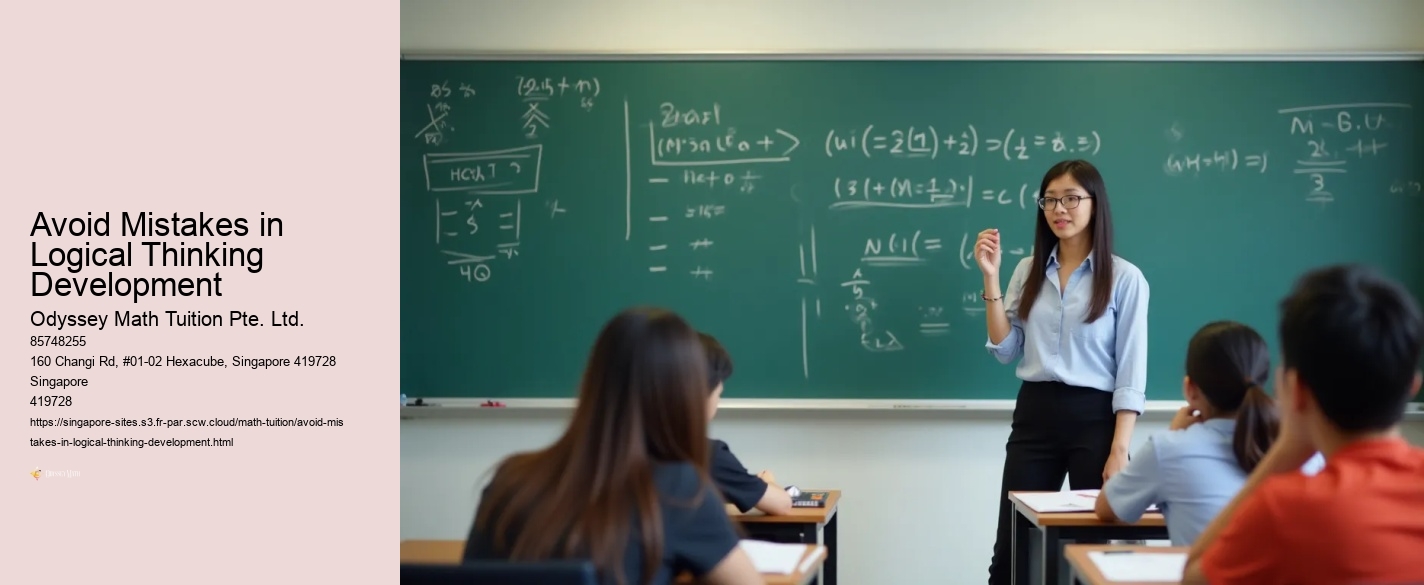
Imagine a bustling Singaporean classroom where the air is filled with anticipation. The teacher writes a series of numbers on the board: 2, 4, 8, 16... What's next? The students, armed with curiosity and a touch of trepidation, embark on a journey of discovery. Here, in the heart of Secondary 1 Math Tuition, lies the key to unlocking the wonders of algebra through the humble number pattern.

The Marvel of Patterns: A Gateway to Algebra

Numbers, much like a symphony, follow patterns that can be both predictable and surprising. These sequences are not just abstract concepts but are foundational in developing logical thinking. When students identify patterns, they are essentially laying the groundwork for algebraic reasoning. This skill is crucial in secondary school mathematics, where a seamless transition from arithmetic to algebra is essential.

Consider the Fibonacci sequence, a simple yet profound pattern that appears in nature, art, and architecture. Its presence in spirals of shells and the arrangement of leaves is a testament to its universal application. By exploring such patterns, students enhance their problem-solving abilities, preparing them for more complex algebraic concepts.

  • The Fibonacci sequence is named after Leonardo of Pisa, known as Fibonacci, who introduced the sequence to Western mathematics in his 1202 book "Liber Abaci."

From Patterns to Equations: The Algebraic Leap

Secondary 1 math tuition classes often focus on bridging the gap between number patterns and algebra. When students recognize that the multiplication of 2 in the sequence 2, 4, 8, 16 can be expressed as 2n, they are not just repeating a sequence—they are engaging in algebraic thinking. This connection is pivotal, as it transforms abstract numbers into meaningful expressions.

What if students could see algebra as a language, one that describes the patterns they observe? This perspective can demystify algebra, making it approachable and even enjoyable. By viewing algebra as a tool to articulate the patterns they explore, students can develop a deeper appreciation and understanding of mathematics.

Logical Thinking: The Silent Architect

Logical thinking is the silent architect behind successful mathematical reasoning. When students engage with number patterns, they are not only learning to predict the next number but also honing their ability to think critically and logically. This skill is invaluable, not just in mathematics but across all disciplines.

For instance, consider the unsung hero of mathematics, George Boole, whose work on logic laid the foundation for modern computer science. His ability to see patterns and think logically transformed the way we interact with technology today. Encouraging students to develop these skills can open doors to a multitude of future opportunities.

  • George Boole's work in the mid-19th century led to the development of Boolean algebra, which is fundamental in computer science and digital circuit design.

Building Confidence Through Practice

In Singapore, where academic excellence is highly valued, secondary 1 math tuition serves as a supportive environment for students to build confidence in their mathematical abilities. These classes often incorporate engaging activities that make learning enjoyable. By practicing number patterns and algebraic expressions in a structured setting, students can consolidate their understanding and boost their confidence.

Imagine a student solving a challenging problem and the thrill of seeing their hard work pay off. This moment of triumph is not just about getting the right answer; it's about building self-assurance and resilience, qualities that will serve them well beyond the classroom.

The Future of Mathematical Exploration

As we look to the future, the connection between number patterns and algebra will continue to be a cornerstone of mathematical education. With the ever-evolving landscape of technology and data, the ability to think logically and recognize patterns will be more important than ever. Encouraging students to embrace these concepts with enthusiasm and curiosity can set them on a path of lifelong learning.

What if every student could see the beauty in mathematics, much like an artist sees beauty in a blank canvas? By nurturing their logical thinking and problem-solving skills, we can inspire the next generation of innovators, thinkers, and dreamers.

Incorporating Technology

Imagine a bustling classroom in Singapore, where eager students, fresh from their primary school days, are stepping into the world of Secondary 1 mathematics. Among them is Sarah, a bright-eyed student who loves puzzles but finds herself challenged by the complexities of number patterns. Her parents, like many others, are keen on ensuring she excels in this new academic chapter and have turned to technology to help illuminate her path.

The Digital Revolution in Math Education

Technology has transformed education, much like how a masterful artist breathes life into a blank canvas. In the realm of Secondary 1 math tuition, digital tools are not just supplementary—they are essential allies in unraveling the intricacies of number patterns and logical thinking.

Consider interactive platforms like Khan Academy or Singapore’s own Koobits. These tools offer a treasure trove of resources, from step-by-step tutorials to engaging quizzes that adapt to a student’s pace. They provide instant feedback, allowing students to correct misconceptions immediately, reinforcing learning in real-time. This immediate response is akin to having a personal tutor who is always at your side, ready to guide you through each mathematical maze.

  • Khan Academy, a free online resource, reaches over 18 million learners each month worldwide.
  • Koobits is used by more than 200,000 students in Singapore, making it a popular choice for math learning.

Understanding Number Patterns: The Backbone of Logical Thinking

Number patterns are more than just sequences of numbers—they are the foundation of logical reasoning and problem-solving. Imagine them as the rhythmic beats of a song; once you grasp the rhythm, the melody of mathematics becomes clearer. Through technology, students can visualize these patterns in dynamic ways, turning abstract concepts into tangible experiences.

For instance, educational apps use colorful graphs and animations to illustrate how number sequences evolve. This visual approach not only makes learning more engaging but also helps students develop a deeper understanding of mathematical relationships. It’s like watching a story unfold, where each number is a character playing a crucial role in the narrative.

  • Research has shown that visual learning can improve comprehension and retention by up to 400%.

Engaging the Mind with Gamified Learning

What if learning math felt like playing a game? With gamified learning platforms, this is not just a possibility but a reality. Apps like Prodigy turn math exercises into adventures where students solve problems to progress through levels. This gamification taps into the natural human love for play, making learning feel less like a chore and more like an exciting challenge.

Gamified platforms encourage students to explore mathematical concepts at their own pace, fostering a sense of autonomy and motivation. The sense of achievement they experience with each completed level translates into a genuine love for learning, which is crucial for long-term academic success.

  • Studies indicate that gamified learning can increase student engagement by 60%.

Bridging the Gap Between School and Home

In Singapore, where academic excellence is highly valued, Secondary 1 math tuition often complements school learning. However, technology bridges the gap between the classroom and home, ensuring that learning continues beyond school hours. Online platforms offer parents the opportunity to track their child’s progress, identifying areas of strength and those needing improvement.

This transparency fosters a collaborative environment where parents, teachers, and students work together to achieve academic goals. It’s like a well-coordinated symphony, where each player knows their part, contributing to a harmonious outcome.

The Future of Math Education: A Call to Action

As we look to the future, the integration of technology in math education promises to be even more transformative. With advancements in artificial intelligence and machine learning, personalized learning experiences will become more tailored, adapting to the unique needs of each student.

For parents in Singapore, the message is clear: embracing technology in your child’s education is not just an option—it’s a necessity. By leveraging these tools, you can help your child navigate the complex world of mathematics with confidence and curiosity. So, why not embark on this journey today? Explore the myriad of digital resources available and witness the magic of learning unfold in your child’s educational journey.

Parental Support and Encouragement

Imagine this: A young Singaporean student, Adeline, sits at the dining table, her brow furrowed as she tackles her Secondary 1 math homework. Her mother, Mei, watches from the kitchen, wanting desperately to help but unsure how best to support her daughter’s growing mathematical journey. She knows that understanding number patterns and developing logical thinking are crucial for Adeline’s success, not just in math, but in life. But how can she, as a parent, play a role in nurturing these skills?

The Building Blocks of Logical Thinking

Logical thinking is akin to constructing a sturdy bridge. Each mathematical concept, like number patterns and sequences, serves as a beam, providing support and structure. These patterns are more than mere numbers; they’re the threads weaving through the fabric of mathematics. Recognizing and understanding these sequences can transform a daunting math problem into a solvable puzzle.

For parents like Mei, fostering this skill at home can be as simple as engaging in everyday activities that challenge and stimulate the mind. Encourage your child to play logic-based games or solve puzzles. Not only do these activities serve as a break from traditional study, but they also cultivate a mindset open to identifying patterns and thinking critically.

  • Did you know that playing chess can significantly improve problem-solving skills and enhance logical thinking?

Secondary 1 Math Tuition: A Helpful Ally

In Singapore, Secondary 1 Math Tuition is a common ally for parents eager to reinforce their child's education. These tuition classes offer a structured environment where students can delve deeper into topics like algebraic expressions, basic geometry, and ratios. By bridging the gap between primary-level math and more advanced secondary topics, tuition can bolster a student’s confidence and performance.

However, it's essential to choose a tuition center that aligns with your child's learning style. Look for programs that incorporate engaging activities to make learning enjoyable and effective. Remember, the goal is to enhance understanding, not just to memorize formulas.

  • Fun Fact: Singapore consistently ranks among the top in international math assessments, partly due to its strong emphasis on conceptual understanding.

Creating a Math-Friendly Environment at Home

Imagine your home as a vibrant garden, where each conversation and activity is a seed planted in fertile soil. To cultivate a math-friendly environment, consider integrating math into daily life. Discuss interesting mathematical concepts during dinner, or explore the math behind everyday activities like cooking or shopping.

Encourage curiosity by asking open-ended questions. What if there were no numbers? How would our world change? Such questions not only stimulate the imagination but also encourage your child to think deeply about the role of math in their lives.

Nurturing a Growth Mindset

Every mathematician, from the novice to the expert, encounters challenges. Emphasize to your child that mistakes are stepping stones to understanding, not roadblocks. Adopting a growth mindset can transform the fear of failure into a hunger for learning.

Share stories of famous mathematicians who overcame obstacles. Did you know that Albert Einstein, one of the greatest minds in history, failed his first college entrance exam? These anecdotes remind students that perseverance is key to success.

Looking to the Future

As Adeline progresses through her secondary school years, the skills she develops now will serve as a foundation for future success. Logical thinking and problem-solving abilities are not confined to mathematics; they are essential skills in the ever-evolving landscape of technology, science, and beyond.

Encourage your child to explore these connections. Consider the world of coding, where logic and math converge to create innovative solutions. Or delve into the arts, where patterns and sequences reveal themselves in music and design. The possibilities are endless, and the journey is yours to shape alongside your child.

  • Interesting Fact: The Fibonacci sequence, a famous mathematical pattern, appears in nature, art, and architecture, showcasing the beauty of math in the world around us.

Frequently Asked Questions

Parents can encourage critical thinking by asking their children to explain their reasoning, solve practical problems together, and provide resources like logic puzzles to enhance their skills.
Engaging in activities such as chess, Sudoku, and logic games can help students develop their logical thinking skills, which are essential for excelling in mathematics.
Logical thinking is crucial because it enables students to understand and solve complex problems, identify patterns, and apply mathematical concepts effectively.
Teachers can support this by incorporating problem-solving tasks, encouraging group discussions, and using real-world examples to make abstract concepts more relatable.
Parents can access online educational platforms, math workbooks, and logic puzzle books designed to enhance critical thinking and problem-solving skills.